High Court Refuses Stay of Contractual Claim Pending ICSID Arbitration
Case Update | 28 September 2026
At a glance
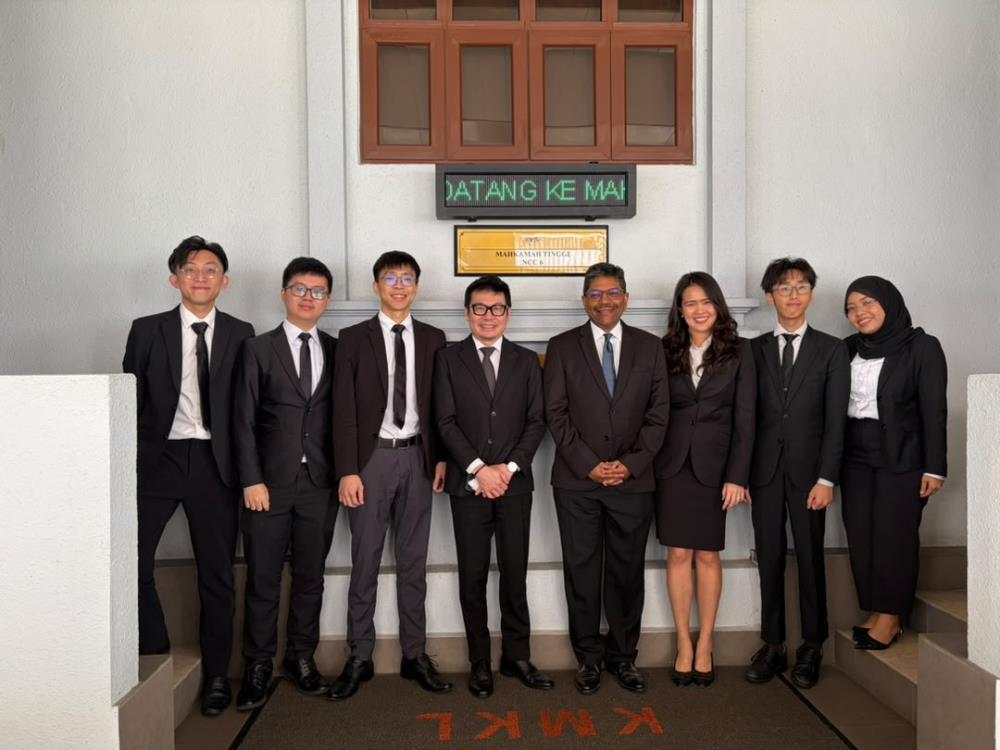
In a decision delivered on 25 September 2026, Leong Wai Hong J dismissed Mulia International Limited’s (“MIL”) application to stay a contractual claim brought by MKD Signature Sdn Bhd (“MKDS”) pending an investment treaty arbitration at the International Centre for Settlement of Investment Disputes (“ICSID”). Shearn Delamore & Co. represented MKDS in opposing the stay. MKDS’s legal team comprised partners Rabindra S. Nathan, Jimmy Liew, Hee Hui Ting, assisted by several associates .
The decision addresses when proceedings arising from the same commercial background may continue before a domestic court and an ICSID tribunal. The Court found that the treaty arbitration did not, by itself, displace MKDS’s right to pursue its separate contractual claim against MIL in Malaysia.
Background
The dispute concerns ownership of the company that owns The Exchange 106 at the Tun Razak Exchange in Kuala Lumpur. Under a sale and purchase agreement and a shareholders’ agreement dated 19 July 2017, as supplemented in September 2022, MKDS acquired a 51% interest in the project company, Mulia Property Development Sdn Bhd. MIL retained the remaining 49% and was given an option to repurchase MKDS’s shares and redeem the financing.
Following MIL’s failure to exercise that option and redeem the financing, MKDS issued a Default of Call Option Notice in June 2023. MKDS brought proceedings in the High Court to enforce its rights under the agreements, including the transfer of MIL’s remaining shares.
Separately, Eka Tjandranegara (“Eka”) commenced ICSID arbitration against the Government of Malaysia. He alleges breaches of Malaysia’s obligations under the ASEAN Comprehensive Investment Agreement in relation to his investment in The Exchange 106. Neither MKDS nor MIL is a party to that arbitration. MIL applied to stay MKDS’s High Court claim until the arbitration was resolved.
The High Court’s decision
Article 26 did not require a stay
MIL relied principally on Article 26 of the ICSID Convention, under which consent to ICSID arbitration is, unless otherwise stated, deemed consent to that arbitration to the exclusion of any other remedy. The Court held that the provision concerned the parties to the ICSID arbitration, Eka and the Government of Malaysia. It did not provide a basis for staying proceedings between MKDS and MIL, who were not parties to that arbitration.
The Court also considered City of London v Sancheti [2009] 1 Lloyd’s Rep 117. That decision explains that a State’s possible responsibility under international law for another entity’s conduct does not, of itself, make that entity a party to the State’s arbitration agreement. The Court treated that distinction as relevant to MIL’s attempt to rely on the ICSID proceedings involving Eka and Malaysia.
The Court also distinguished Attorney-General v Mobil Oil NZ Ltd [1989] 2 NZLR 649. The stay in that New Zealand case rested on an express statutory power under Section 8 of the Arbitration (International Investment Disputes) Act 1979. The Court found no equivalent Malaysian provision authorising the stay sought by MIL.
Factual overlap did not make the claims the same dispute
MKDS’s High Court claim seeks to enforce contractual rights against MIL under the parties’ agreements. Eka’s ICSID claim concerns Malaysia’s alleged obligations under an investment treaty. The Court recognised that the two proceedings may involve overlapping facts, but found that their parties, legal bases and remedies were distinct. Eka’s claims would be treaty-based claims governed by international law, whereas MKDS’s claims were plain contractual claims governed by Malaysian law. Each forum could therefore determine the claim before it without requiring the High Court proceedings to await the ICSID tribunal’s decision.
The Court also found that allowing MKDS’s claim to continue would not prevent Eka from pursuing the treaty claim or obtaining an appropriate remedy if he succeeded. Whether MKDS’s conduct is attributable to Malaysia for the purpose of treaty responsibility was a question for the ICSID tribunal; it did not justify staying MKDS’s claim against MIL.
No discretionary stay was justified
The Court considered whether it should stay the proceedings under its inherent power to manage its process, including the principles discussed in Tomolugen Holdings Ltd v Silica Investors Ltd [2015] SGCA 57 and Protasco Bhd v Tey Por Yee [2018] 5 CLJ 299. It considered whether special circumstances, a risk of injustice or an abuse of process called for the proceedings to be stayed. It found no sufficient risk of inconsistent decisions or other circumstances warranting a stay, having regard in particular to the different parties, claims and relief sought. The Court also noted that ICSID and domestic proceedings may, in appropriate circumstances, continue concurrently, referring to Impregilo S.p.A. v Islamic Republic of Pakistan (ICSID Case No. ARB/03/3).
An assertion about Malaysia’s position required evidence
MIL also asserted that Malaysia had not objected to the ICSID tribunal’s jurisdiction. The Court declined to act on that assertion because it had not been established by affidavit or other properly admitted evidence. In any event, Malaysia’s position in the ICSID arbitration would not bind MKDS, which is not a party to it.
Why this matters
This decision is a rare example, even within the context of common law jurisdictions, of a national court being asked to stay domestic proceedings because of an ongoing ICSID arbitration. The decision shows that a pending ICSID arbitration does not automatically halt related contractual litigation in Malaysia. A party seeking a stay must identify a legal basis for it and establish why the claims before the two fora, despite any factual overlap, make a stay necessary or appropriate.
For parties whose investment arrangements involve both commercial contracts and treaty protections, the distinction between the parties’ contractual rights and a State’s treaty obligations can determine whether domestic proceedings may continue alongside investment arbitration.